
John 4: 1-30
It was not the sort of thing you’d expect to see at that time. A rabbi unashamedly talking to a Samaritan woman…alone. But Jesus loved spending time with the outcasts.
The drama and animosity between the Jews and Samaritans would put The Real Housewives to shame.
Oh, the Drama!
To sum it up: Babylonians (or Assyrians…I’ve heard it both ways) prevailed over south Judah and took many of its people back to Babylon, except for “the hillbillies”. The lower class stayed behind and married non-Jews. Basically, they became their own race and culture in a region that became known as Samaria. Since the Samaritans liked to mix it up a bit, their people were religious mutts. They followed the Law of Moses, like the Jews, however they added in their own practices and places of worship. One such place was a temple on Mount Gerizim. So it didn’t improve their relationship when the Jews decided to burn that temple to the ground. It also didn’t help when the Samaritans threw a corpse inside the Jewish temple in order to contaminate the sacred place.
The Dirty Dog Howls the Loudest
When it came to the Jews, the religious leaders weren’t completely innocent at putting a spin on the Law of Moses either. This is why they didn’t like it when Jesus came in like an Avenger, neutralizing the distorted laws they’ve been teaching their people.
While Jesus wasn’t very popular among these leaders (at least not in a good way), His popularity was spreading across the people of Israel in a very good way.
And of all places for His public ministry to truly begin, He started in Samaria with a woman at Jacob’s well.
An Unlikely Leading Lady
One of the reasons I believe The Bible is truth is because I would be hard pressed to believe that even the most creative disciples would come up with or even dare to write this whopper of a story.
This woman was not only a Samaritan; she was a woman. Not only was she a woman; she was a woman with a scandalous reputation. Not only was she a woman with a scandalous reputation; she was a woman with a scandalous reputation talking to a rabbi at a well…alone…unchaperoned. If John were to make up a story, this woman would be the least likely hero in those days.
The Red Zone
Jesus and His disciples were heading to Galilee from Judea. Samaria sits in between these two locations and would have to pass through there in order to reach their destination. Considering the Jews burned down their temple and pretty much banned them from entering Jerusalem, Jews entering Samaria would be like entering a lion’s den. Instead of traveling outside the border of the city, Jesus and the disciples decided to throw caution to the wind and cut right on through. It’s high noon. It’s hot. They’re tired and hungry. Most importantly, Jesus was on a mission.
Now That’s What I Call High Quality H2O
His disciples go into a nearby village to get food while Jesus rests at Jacob’s well. A woman carrying jars comes to the well to collect some water.
Jesus asks her for a drink of water. She immediately recognizes that He is a Jew. “How is that you, a Jew, ask a drink from me, a Samaritan?” she asks Him. He tells her (and I’m paraphrasing here), “If you knew who I was, you’d be asking me for living water, and you would never thirst again.” In those times, living water meant a stream or fountain. It was moving water that provided the earth.
He was talking about was spiritual thirst and spiritual water. Jesus knew she was thirsty, not for water, but for new life. I don’t think she caught onto this right away.
She asks Him, “Are you greater than our father, Jacob?” I think she’s asking if He provides more abundant and better quality water than Jacob’s well. She then asks for this water He’s talking about, but Jesus tells her to get her husband first. (Side note: It was not culturally appropriate for a man to speak to a woman for a period of time, so Jesus’ request to get her husband was two-fold; it stayed within the lines of propriety AND it opens the door to the point He wants to make to her.) “I have no husband,” she says.
No Sugar to Coat
It is at this time that Jesus calls her out on her sin. He confronts her with the fact that she has had 5 husbands and the man she’s living with now is not her husband.
In order to turn away from sin, we often have to feel the conviction of it. Jesus tells her the error of her ways, and it must tug at her heartstrings. But instead of being discouraged she is encouraged. Elated, even.
It doesn’t take long for her to understand that the man standing before her is The Messiah. Without a moment of hesitation, she ran into town and began what I would consider to be evangelizing.
So the woman left her water jar and went away into town and said to the people, “Come, see a man who told me all that I ever did. Can this be the Christ?” (John 4:28-29)
I think the leaving of the water jars is significant because it shows her readiness and enthusiasm to immediately go out and spread the good news. The water from the well was nothing compared to the living water she was provided, and she needed to share it with others.
Takin’ Care of Business
While others shunned and rejected her, God chose her. Not to shame her. Not to make her feel less about herself. God sent Jesus there because she was ready for her life to change. Samaria was ready for a change. And He chose her to go out and evangelize.
I imagine myself as a townsperson hearing this scorned woman eagerly telling everyone to come and see this man who told her everything about herself. Considering some of the things this woman has done, I would be curious as to why she’s so excited to share this piece of information with the whole town. Why isn’t she walking in shame? Why is she boldly proclaiming that there is a man who called her out on her sins and we should all go see him?
Jesus and His disciples enter the city to begin His ministry. I’m visual person, and I always picture this like a scene out of a movie where Jesus and the disciples are walking slow motion into town with “Back in Black” or “Takin’ Care of Business” as the theme song. Try it and tell me if I’m wrong.
The Moral of the Story is…
There are so many moral lessons to this event:
*God loves you despite the sins of your past.
*God calls upon the rejected, shunned, overlooked, and burdened and can make them shine.
*God will pull you out of the dark place and change your life if you let Him.
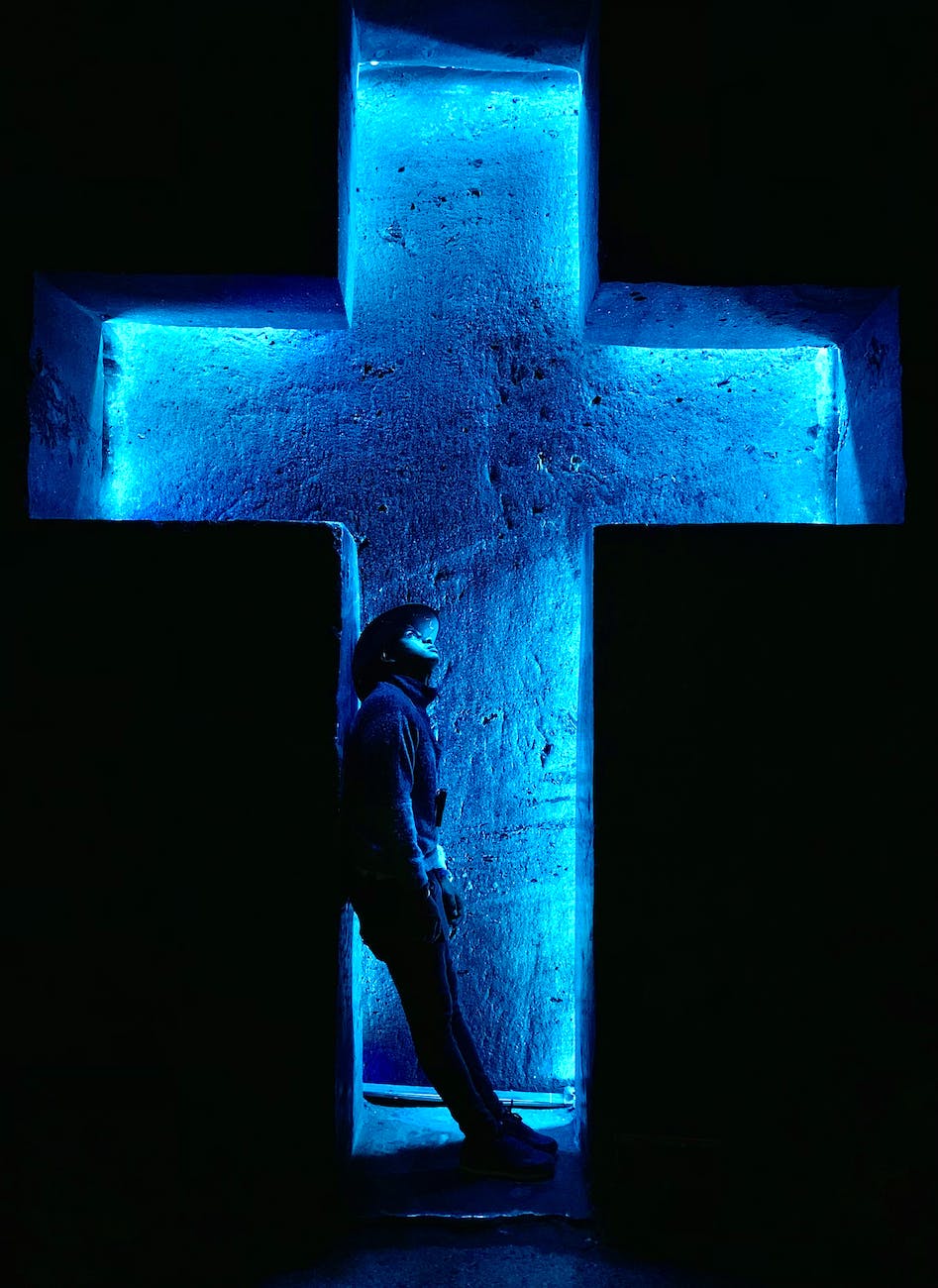
*God can use you to help save others and turn their eyes upon Jesus.
*As Christians, we should spend more time with the rejected, the shunned, and the defiled. How else are they going to see the love of Jesus if we don’t become His hands and feet?
The list could go on and on.
His glorious love knows no bounds and that makes me love Him more and more each day.



 Eyes Upon Jesus
Leave a comment